
Last updated October 31, 2026
 Home additions & ADU
 Kitchen remodeling
 Bathroom remodeling
 Roofing
 Windows & doors
 Driveway & pavers
 Fence
Free written scope consultation - allowances, timeline, and change-order rules on paper before a single trade is scheduled
Construction Emergency Preparedness Guide for Milpitas Homes
Milpitas sits in a rare geographic position: a valley floor community tucked between the Diablo Range foothills and the southern edge of San Francisco Bay, crossed by not one but three active fault traces and drained by creeks that have flooded repeatedly since the 1950s. Most homeowners here have smoke detectors and maybe a go-bag, but almost none have a pre-vetted contractor relationship, the single asset that determines how fast a home gets assessed, secured, and rebuilt after a seismic or flood event. This guide covers the structural and construction-side emergency preparedness steps specific to Milpitas homes, from seismic retrofits and flood documentation to spotting post-disaster contractor scams. If you own a home in Milpitas, this is the preparation guide that actually matters when the ground moves or the water rises.
Styles & brands we work with
Quick Answer
Construction emergency preparedness for Milpitas homes means three things: retrofitting your structure against the specific hazards here (earthquake shaking from the Calaveras and Hayward faults, creek flooding in lower elevations, wildfire interface on eastern hillsides), maintaining a documented record of your home’s Construction Permits, Codes & Inspections in CA: What You Need to Know, and having a pre-vetted general contractor relationship before an event occurs. Homeowners who complete these steps recover faster, pay less out of pocket, and avoid the post-disaster contractor scams that flood the Bay Area within days of any major event.
Table of Contents
- Milpitas’s Specific Hazard Profile: What You’re Actually Preparing For
- The Pre-Vetted Contractor Relationship: Why It Matters More Than a Go-Bag
- Pre-Emergency Documentation: What Insurance Adjusters and Contractors Actually Need
- Seismic Retrofits That Function as Pre-Emptive Emergency Mitigation
- Post-Earthquake Structural Assessment: Who’s Qualified and What You’re Looking At
- Flood Preparation for Lower Elevation Milpitas Homes
- Identifying Emergency Contractor Scams After a Disaster
- Common Mistakes to Avoid
- When to Call a Professional
- Frequently Asked Questions
- The Bottom Line
Milpitas’s Specific Hazard Profile: What You’re Actually Preparing For
Milpitas is not a generic Bay Area suburb with generic risks. The city sits approximately 5 miles east of the Hayward Fault’s northern segment and roughly 8 to 10 miles west of the Calaveras Fault, a dual-fault exposure that produces different shaking characteristics than what a San Francisco or Oakland homeowner experiences. The Hayward Fault produces a longer, rolling motion; the Calaveras Fault tends to deliver a sharper, more abrupt jolt. Your home’s construction type, foundation, and age determine which of these motions poses the bigger threat.
The 1989 Loma Prieta earthquake was centered near Santa Cruz, roughly 40 miles south of Milpitas, and still caused visible damage to older masonry chimneys and unreinforced foundations throughout the city. A Hayward Fault event centered in Fremont or East San Jose would be dramatically closer. The United States Geological Survey’s most recent HayWired scenario modeling projects that a magnitude 7.0 Hayward Fault rupture would subject Milpitas to severe shaking intensities, with ground acceleration strong enough to knock homes off unreinforced foundations and collapse soft-story conditions.
Flood risk is a separate and often overlooked exposure. The Federal Emergency Management Agency maps portions of Milpitas within Special Flood Hazard Areas, particularly along the Berryessa Creek corridor, Lower Penitencia Creek, and the Calera Creek watershed. Homes in the lower elevations near the bay, including neighborhoods east of Interstate 880 and south of Dixon Landing Road, face the highest standing-water risk during winter atmospheric river events. FEMA flood maps are updated periodically; a home that was outside the flood zone in 2005 may be inside it in the current mapping cycle.
The third hazard is wildfire interface. The eastern foothills of Milpitas, including neighborhoods along Calaveras Ridge and the hillside developments near Ed R. Levin County Park, sit within the California Department of Forestry and Fire Protection’s Wildland-Urban Interface designation. Fire risk here is not theoretical; the 2020 SCU Lightning Complex fires burned within 15 miles of Milpitas’s eastern boundary. Ember intrusion, not direct flame front, is the primary threat to homes in the interface zone, and construction material choices on roofs, vents, and siding determine whether an ember becomes a house fire.
The Pre-Vetted Contractor Relationship: Why It Matters More Than a Go-Bag
After the 1989 Loma Prieta earthquake, Bay Area homeowners waited an average of three to six weeks for a licensed contractor to even look at their structural damage. Unlicensed operators, by contrast, were knocking on doors within 48 hours, and many homeowners paid cash deposits for work that was never completed. The pattern repeated after the 2014 South Napa earthquake and again after the 2017 Tubbs Fire, though on different geographic footprints.
The lesson is straightforward: the single most practical emergency preparedness step a Milpitas homeowner can take is establishing a relationship with a licensed general contractor before the emergency happens. A pre-existing relationship means you have a phone number that answers, a contractor who knows your home’s construction type and history, and a queue position that doesn’t depend on cold-calling through a disaster-degraded phone network.
We’ve seen this play out directly in post-event scenarios. Homeowners with a prior working relationship get assessments scheduled within days. Homeowners starting from zero get voicemail boxes, weeks-long queues, or the unlicensed contractors who materialize after every Bay Area disaster. A general contractor in Milpitas who has already walked your property can assess new damage against a known baseline, which matters when you’re trying to determine whether a crack is new or has been there for years.
What a pre-vetted relationship does not require is a completed project. Even a thorough inspection, a documented walkthrough, and a written assessment of your home’s current structural condition creates the paper trail and the familiarity that pays dividends after an event. If you’re planning a DIY vs Professional Construction: The Milpitas Homeowner’s Decision Guide anyway, the relationship-building happens naturally; if not, a standalone structural assessment is a reasonable one-time expense that functions as an insurance policy against post-disaster chaos.
Pre-Emergency Documentation: What Insurance Adjusters and Contractors Actually Need
Insurance claims after a disaster move at the speed of documentation. The homeowners who get claims approved in weeks, not months, are the ones who can produce permitted plans, material specifications, and pre-event photographs without scrambling. The homeowners who get denied or delayed are the ones who say “it was always like that” without any proof to back it up.
Here’s what you should maintain in a fireproof and waterproof container, ideally with digital backups stored off-site:
- Permitted plans and final inspection sign-offs for any work done on the home. This includes the original construction permit if the home was built after 1980, plus any remodel, addition, reroof, or retrofit permits. Milpitas Building and Safety Department maintains records, but post-disaster record requests can take weeks.
- Material specifications by brand and product line. Knowing you have a GAF Timberline HDZ roof versus an unnamed “architectural shingle” changes the replacement cost calculation. Knowing your windows are Milgard versus generic vinyl changes the claim valuation. We spec materials by name, so you know exactly what’s going into your home, and that same documentation becomes claims evidence after an event.
- Pre-event photographs of structural elements: foundation walls, crawl space, attic framing, chimney, roof decking, retaining walls, and the exterior envelope from all four sides. Take these annually, date-stamp them, and store them digitally. Post-disaster adjusters use these to distinguish pre-existing conditions from event-caused damage.
- A written inventory of high-value finishes and fixtures. Countertop material (Cambria versus Silestone versus caesarstone), flooring type, cabinet lines (KraftMaid, Wellborn), plumbing fixtures (Kohler, Grohe, Toto). Replacement cost depends on like-kind valuation, and “like-kind” is a material-specific determination.
- Your contractor’s contact information and any prior inspection reports. If we’ve walked your home before, our baseline assessment becomes part of the claim file.
One additional documentation step specific to Milpitas: if your home is in or near a FEMA mapped flood zone, photograph the elevation of your finished floor relative to the street and neighboring structures. Flood claims routinely involve disputes about water line elevations and pre-existing foundation settlement, and a dated photo set resolves those disputes before they become claim denials.
Seismic Retrofits That Function as Pre-Emptive Emergency Mitigation
Construction upgrades are the only form of emergency preparedness that reduces the severity of the emergency itself. A home with a properly braced and bolted foundation, a strapped water heater, and a reinforced cripple wall sustains measurably less damage in a moderate earthquake than an unretrofitted home of the same age and construction type.
The three retrofits that matter most in Milpitas, in priority order:
- Cripple wall bracing. Homes built before roughly 1980 in Milpitas often have a short wood-framed wall, typically 18 to 42 inches tall, between the foundation and the first floor. These cripple walls are the single most common point of failure in Bay Area earthquakes. Bracing involves installing structural plywood panels with correct nailing patterns and connecting them to the foundation with new anchor bolts. Milpitas requires a building permit for cripple wall bracing, and the city’s typical plan-check turnaround is one to three weeks for a properly prepared application.
- Water heater strapping and flexible gas connections. California state law has required new water heater installations to include seismic strapping since 1982, but many Milpitas homes still have unstrapped or inadequately strapped tanks. An unstrapped water heater in a significant earthquake becomes a 400-plus-pound projectile that can rupture gas lines and start fires. The California Plumbing Code specifies two straps on the upper third and lower third of the tank. This is a same-day job for a licensed contractor, but it’s not a DIY project for anyone uncomfortable working around gas lines.
- Soft-story retrofits for homes with parking or living space over a garage. Milpitas has a significant stock of multi-story homes with tuck-under parking, especially in neighborhoods built between 1960 and 1990. These soft-story conditions concentrate earthquake forces on the long, often unbraced garage wall face, and failures here are catastrophic. A soft-story retrofit typically involves installing a steel moment frame or heavily braced wall panels in the garage, and Milpitas requires structural engineering drawings and a permit for this work.
Foundation bolting alone, without cripple wall bracing, is incomplete. Bolts prevent the house from sliding off the foundation; bracing prevents the cripple wall itself from collapsing. A home renovation in Milpitas that includes seismic retrofit work should be treated as a structural project with permits and inspections, not a handyman task.
Post-Earthquake Structural Assessment: Who’s Qualified and What You’re Looking At
After a significant earthquake, Milpitas homes will be subject to two distinct assessment processes, and homeowners need to understand the difference. The first is the city-led ATC-20 rapid evaluation, which uses trained building inspectors and volunteer engineers to place colored placards on buildings: green for apparently safe, yellow for restricted entry, red for unsafe. This is a safety designation for occupancy, not a damage assessment, and it does not substitute for a contractor’s detailed evaluation.
The second is the structural assessment performed by a licensed general contractor or structural engineer, which is what your insurance carrier actually uses to determine scope of repair. This assessment covers:
- Foundation condition: new cracks, changes to existing cracks, vertical or horizontal displacement, anchor bolt condition, and concrete spalling.
- Cripple wall condition: racking, sheathing separation, nail shear failures, sill plate movement.
- Load-bearing wall and column condition: visible deflection, cracking patterns, separation at plate connections.
- Roof and ceiling framing: truss movement, ridge beam sag, rafter separation at the wall line.
- Chimney condition: cracks, leaning, separation from the house, mortar joint failure.
- Utility connections: gas line movement, water line rupture, electrical mast separation from the service drop.
A green ATC-20 placard does not mean your home is undamaged. It means it’s safe to enter. Detailed damage assessment requires a different skill set and a different report. If you’ve already established a relationship with a home remodeling contractor in Milpitas, that contractor can move from a known baseline rather than evaluating the entire structure cold.
Flood Preparation for Lower Elevation Milpitas Homes
Flood preparation in Milpitas is a different exercise than earthquake preparation, and the homes at risk are concentrated in predictable areas. The Berryessa Creek corridor, Lower Penitencia Creek, and Calera Creek all have FEMA-mapped floodplains that overlap with residential neighborhoods, particularly east of I-880 and in the lower-lying areas south of the bayfront industrial district.
Construction-side flood preparation for Milpitas homes includes:
- Elevation documentation. Know your finished floor elevation relative to the FEMA Base Flood Elevation for your property. This determines your flood insurance rate and your actual flood risk. A surveyor or a contractor with access to FEMA FIRM maps can provide this number.
- Foundation waterproofing and drainage review. Milpitas’s clay-heavy soils expand when saturated, which changes the hydrostatic pressure against foundation walls and can cause cracking and seepage even in homes that have never flooded. Exterior drainage, properly sloped grading, and functional downspout extensions matter more here than in most Bay Area communities.
- Backflow prevention on sewer and storm drains. Milpitas’s older neighborhoods have combined storm and sanitary sewer systems in some areas, and heavy sustained rain can cause sewage backup into lower-level fixtures. A backflow preventer installed by a licensed plumber is the only reliable defense.
- Elevated mechanical systems. If your furnace, water heater, or electrical panel sits in a crawl space or garage floor that could take water, elevating those systems even 12 to 18 inches reduces the post-flood recovery scope significantly.
Flood insurance is a separate conversation; this guide focuses on the construction-side preparation. But the construction-side preparation determines how long your home is uninhabitable after a flood, which determines how much your living-expense claim actually costs you.
Identifying Emergency Contractor Scams After a Disaster
Within 48 to 72 hours of any significant Bay Area disaster, unlicensed contractors and outright scam operators begin targeting affected neighborhoods, making Construction Warning Signs: A Milpitas Homeowner’s Reference Guide essential reading. The tactics are consistent and predictable, and Milpitas homeowners should recognize them before the doorbell rings.
The most common Bay Area post-disaster contractor scams:
- The “we’re already in your neighborhood” pitch. A crew knocks on your door claiming to be working on a neighbor’s home and offering a “discounted” assessment or repair because they’re already mobilized. Legitimate contractors do not canvass door-to-door after disasters. This pitch nearly always comes from unlicensed operators.
- The cash deposit upfront. A contractor demands a large cash deposit, often 30 to 50 percent of the estimated total, to “secure a spot in the queue.” California law limits contractor down payments to 10 percent of the contract price or $1,000, whichever is less. Anyone asking for more is either unlicensed or operating illegally.
- The “we’ll handle your insurance directly” scheme. A contractor offers to negotiate with your insurance carrier and asks you to sign over your claim benefits, a practice called Assignment of Benefits that is heavily restricted in California and loaded with consumer risk. You lose control of your claim, and the contractor may bill the carrier for work that was never performed.
- The temporary tarp and disappear. A crew shows up, installs blue tarps on a damaged roof, collects a payment, and is never heard from again. The tarps fail within weeks, and the homeowner has no recourse because the operator was never licensed in the first place.
- The “structural emergency” upsell. An unlicensed or unscrupulous operator declares your home structurally unsafe based on cosmetic damage and pressures you into an immediate, expensive “emergency repair” with no permit and no inspection.
How to vet a contractor rapidly under pressure: verify the license number at the Contractors State License Board website, confirm the license is active and matches the person at your door, request proof of workers’ compensation and general liability insurance in their name with you as the certificate holder, and decline any contract that includes a down payment above the statutory 10 percent limit. A licensed contractor with a Milpitas business address and a verifiable local project history is not the person knocking on your door 48 hours after an earthquake.
Common Mistakes to Avoid
- Treating a green ATC-20 placard as a clean bill of health. The city’s rapid evaluation is a safety screening, not a damage assessment. A green placard means you can enter; it does not mean your foundation, cripple walls, or roof framing are undamaged.
- Skipping the pre-event documentation because it feels like procrastination. The homeowners who delay photographing their foundation, storing permitted plans, or documenting material specifications are the ones whose insurance claims stall for months. This is the single highest-ROI preparation step in this guide.
- Signing a contract with a door-knocking contractor under pressure. No legitimate contractor canvasses door-to-door after a disaster. The urgency to sign immediately is a manipulation tactic, not a reflection of your actual construction needs.
- Assuming flood risk ended when FEMA updated the maps. FEMA maps are predictive, not retroactive. Homes outside the mapped floodplain still flood in Milpitas, especially during atmospheric river events that exceed the design storm. Construction-side preparation matters regardless of your current flood zone letter.
- Delaying seismic retrofits because the retrofit cost feels high relative to the perceived risk. Cripple wall bracing and water heater strapping are the two lowest-cost retrofits with the highest damage-reduction payoff. A braced cripple wall costs a fraction of what a collapsed cripple wall costs to rebuild after an event.
- Hiring a specialist for every hazard instead of one accountable contractor. A roofer for the roof, a foundation company for the foundation, a plumber for the backflow valve: post-disaster coordination across five separate vendors is where recovery timelines go to die. A Milpitas Construction home relationship means one point of contact across the entire scope.
When to Call a Professional
Call a licensed general contractor if you see new foundation cracks after an earthquake, visible displacement between the foundation and the wood framing above it, a chimney that has separated from the house, or any sign that your water heater has moved on its platform. Call after a flood if water entered your crawl space, if your electrical panel was submerged, or if you notice new cracks in foundation walls after soils have dried. Call before an emergency if you’ve never had a structural assessment done on your home, if your home was built before 1980 without a retrofit, or if you’re in a FEMA-mapped flood zone without a current elevation certificate. Milpitas Construction offers free estimates in Milpitas, call (877) 752-4194.
Frequently Asked Questions
Cripple wall bracing and foundation bolting in Milpitas typically runs between $4,000 and $12,000 depending on the home’s square footage, cripple wall height, and accessibility. Soft-story retrofits with a steel moment frame run higher, generally $15,000 to $35,000. Call (877) 752-4194 for an exact quote, estimates are free.
Yes. Milpitas Building and Safety Department requires permits for cripple wall bracing, foundation bolting, soft-story retrofits, and any structural modification. A licensed contractor will pull the permit and schedule the required inspections; unpermitted retrofit work creates liability issues and may not be recognized by your insurance carrier.
Complete the three priority retrofits: cripple wall bracing, water heater strapping with flexible gas connections, and soft-story reinforcement if your home has parking or living space over a garage. Then document your home’s structural condition with dated photos, store permitted plans and material specifications off-site, and establish a relationship with a licensed general contractor so you’re not cold-calling after the event.
A thorough structural assessment of a single-family Milpitas home takes two to four hours on site, depending on the home’s size, foundation type, and access to the crawl space and attic. The written report follows within a few days. During post-disaster surge periods, homeowners with pre-existing contractor relationships get priority scheduling; everyone else waits in queue.
Portions of Milpitas are in FEMA-designated Special Flood Hazard Areas, primarily along the Berryessa Creek, Lower Penitencia Creek, and Calera Creek corridors and in lower elevations east of I-880. Check your specific address on the FEMA Flood Map Service Center, and consider an elevation certificate even if you’re outside the mapped zone, because Milpitas has experienced flooding outside mapped boundaries during atmospheric river events.
Verify the contractor’s license at the CSLB website, confirm it’s active and in the name of the person you’re dealing with, request proof of workers’ compensation and general liability insurance with you named as certificate holder, and refuse any contract with a down payment above 10 percent or $1,000, whichever is less. A contractor who was already familiar with your home before the disaster is the safest possible choice.
The Bottom Line
Milpitas homeowners face a specific, well-documented set of construction hazards: dual-fault seismic exposure, creek-corridor flooding, and wildfire interface on the eastern hillsides. The preparation that matters is structural, documented, and relationship-based. Brace your cripple walls, strap your water heater, photograph your foundation annually, store your permitted plans and material specs off-site, and establish a working relationship with a licensed general contractor before you need one. The homeowners who wait until after the event to start figuring out who to call are the ones who wait weeks for assessments, pay inflated prices to unlicensed operators, and fight insurance claims without the documentation that resolves them. For more guides & resources, explore our blog. Premium brands, proper installation, one accountable team: that’s the recovery path, and it starts before the emergency, not after.
Written by the team at Milpitas Construction, serving Milpitas since 2018.
See the difference
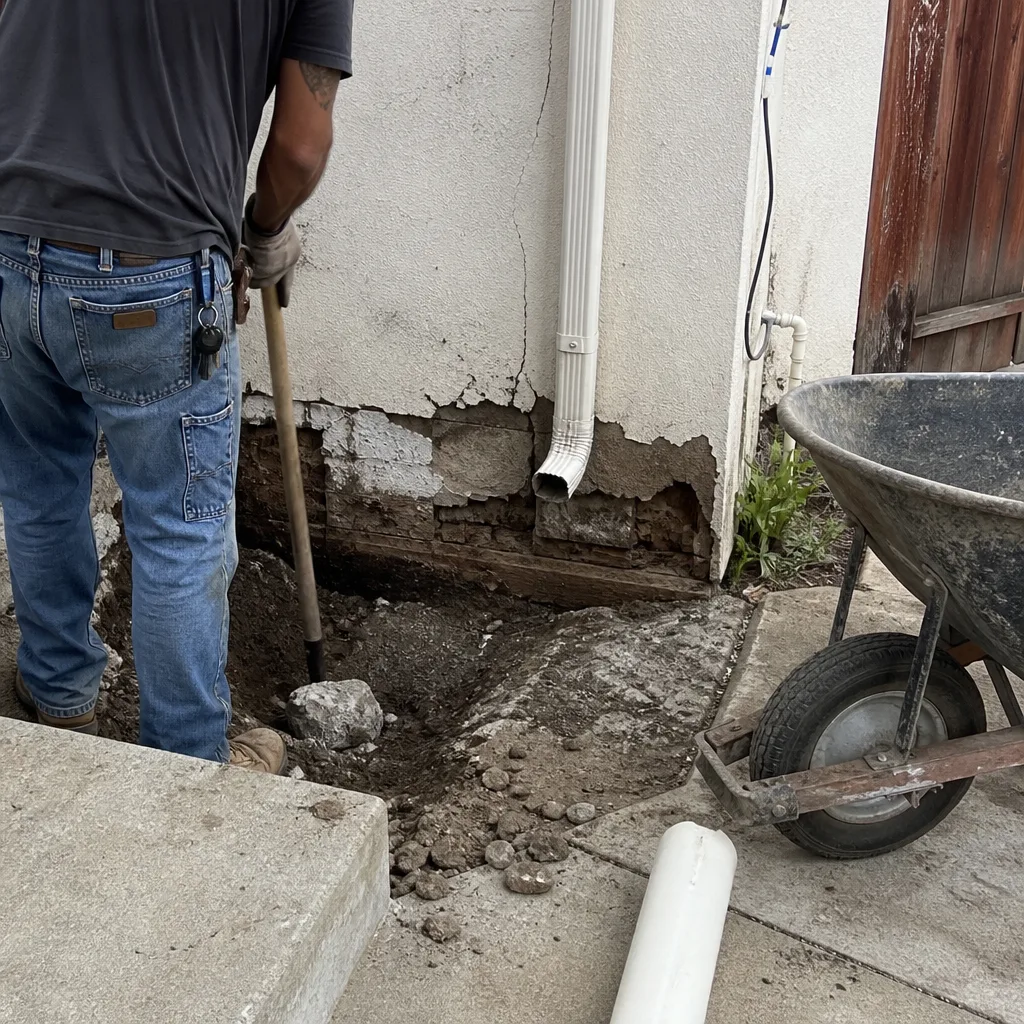 Before
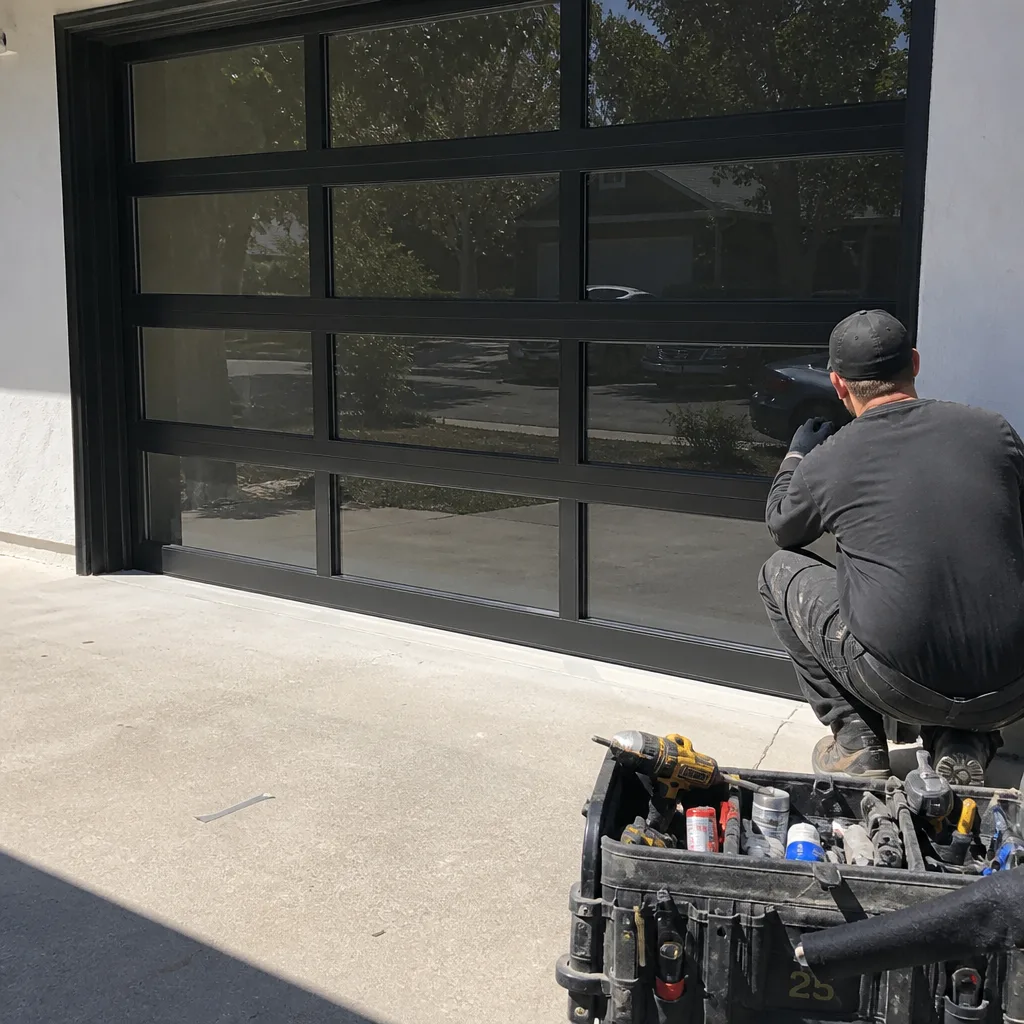 After
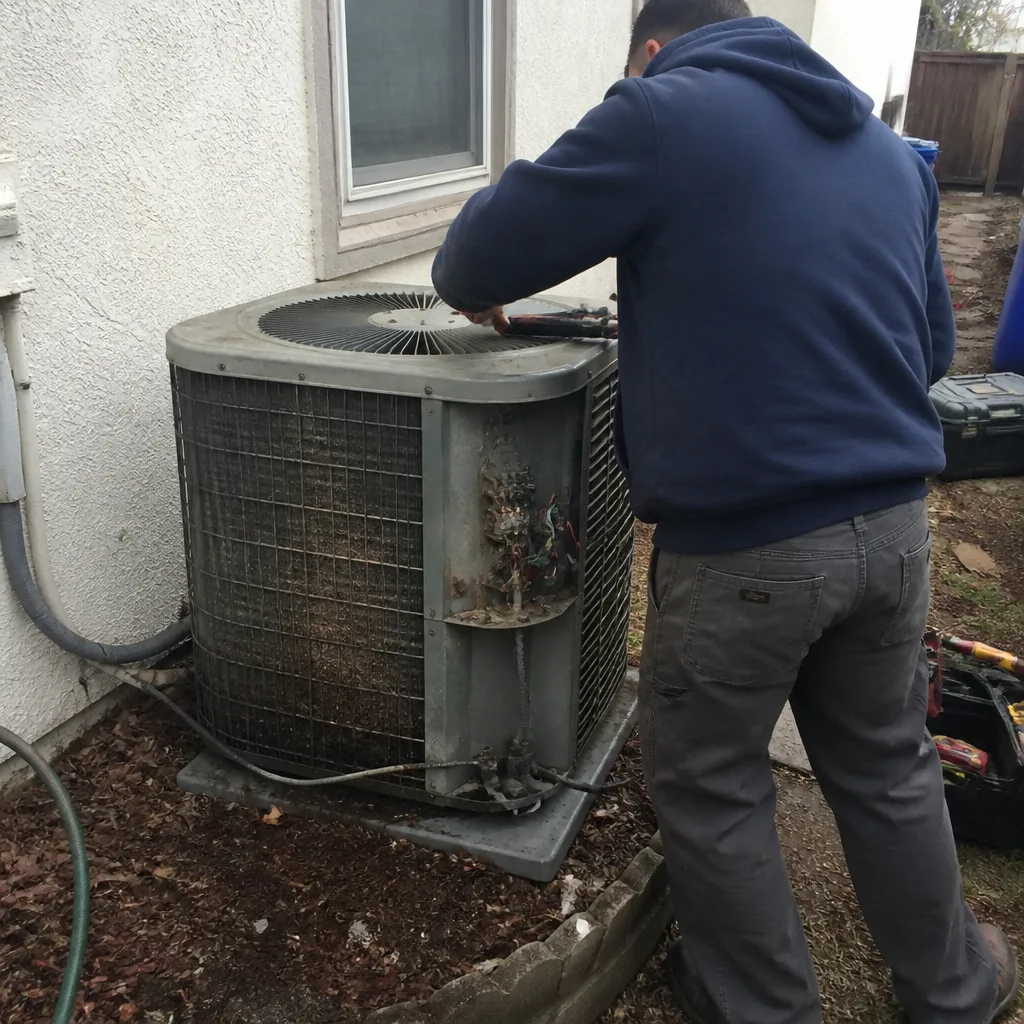 Before
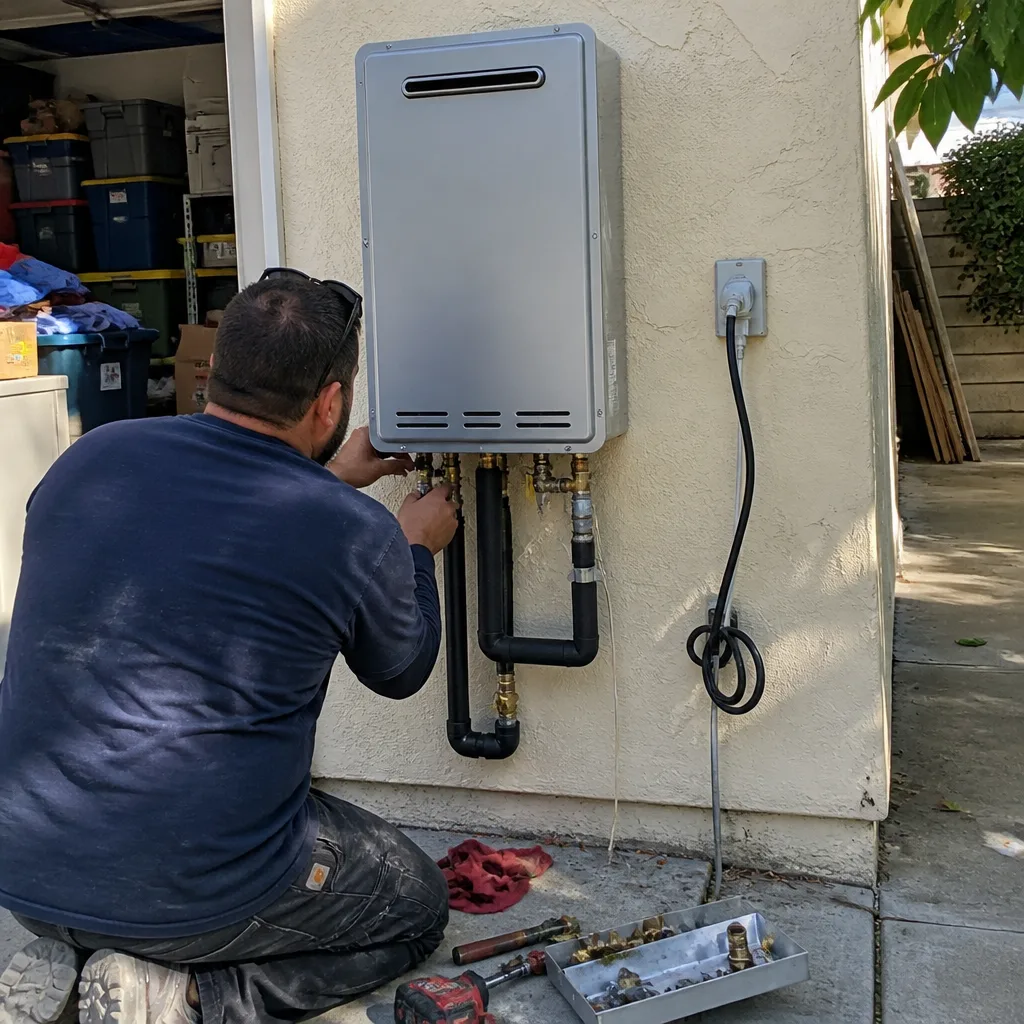 After
 Before
 After